For decades, health authorities have warned people to avoid high-fat dairy because of its link to heart disease. But new research suggests that, when eaten in moderation, dairy foods high in saturated fat could have some benefits.
The research found no such dementia-reducing effect from low-fat cheese, low-fat cream, high- or low-fat milk, butter, or fermented milk products such as yogurt.
“For many years, people were advised to limit high-fat dairy, and cheese was even placed in the ‘foods to avoid’ category in the MIND [anti-dementia] diet,” says study author Emily Sonestedt, PhD, associate professor in nutritional epidemiology at Lund University in Malmö, Sweden. “Our earlier research on heart health had suggested that cheese may be linked to better vascular outcomes. Since blood vessel health is so important for brain health, it was plausible that we might see a similar pattern for dementia.”
A Vast Study Population Lends Strength to Results
For the analysis, published in Neurology (the journal of the American Academy of Neurology), the scientists examined data from close to 28,000 adults in Sweden who were an average age of 58 at the start of the investigation. Over an average of 25 years follow-up, about 1 in 10 developed dementia.
When participants began the study, they told investigators what they ate during the course of a week, and answered questions about their diet over the past few years, including their intake of high-fat cheeses (containing more than 20 percent fat) and high-fat creams (containing 30 to 40 percent fat).
All Dairy Is Not Equal When It Comes to Brain Health
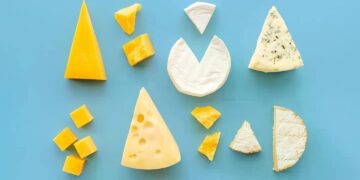
To assess outcomes between study subjects who ate more cheese and those who ate less, the researchers singled out those who typically ate 1.76 ounces of high-fat cheese (the equivalent of two slices of cheddar) daily, comparing these individuals with those who ate less than 0.5 ounces per day.
After adjusting for factors that could influence results (such as overall diet quality, age, and sex), Dr. Sonestedt and her collaborators estimated that individuals with the greater intake of high-fat cheese had a 13 percent lower risk of developing dementia compared with those with the lesser intake.
When looking at specific types of dementia, the study authors noted that those eating more cheese had a 29 percent lower risk of vascular dementia. Vascular dementia develops when strokes or blood vessel blockage decreases blood flow to the brain.
Study subjects who ate high-fat cheese also had a lower risk of Alzheimer’s disease, a different cause of dementia, but only if they were not carrying a specific inherited risk factor for Alzheimer’s known as the APOE e4 gene variant.
Cream, another form of high-fat dairy, also seemed to impart a brain boost. Compared with people who did not eat cream, those who had about 1.4 tablespoons of heavy whipping cream or more daily had a 16 percent lower chance of developing dementia.
“To our knowledge, no previous study has examined cream in relation to dementia,” says Sonestedt. “It’s an interesting finding, but one that needs to be confirmed in future research.”
Is Dairy Fat Different From Other Fats?
Auriel Willette, PhD, associate professor of neurology with the Institute for Health, Health Care Policy, and Aging Research at Rutgers Health in New Brunswick, New Jersey, was surprised that low-fat cheese such as light mozzarella and cottage cheese was not related to lower dementia risk but high-fat cheese was.
“We are constantly told that saturated fat is bad, regardless of the source,” says Dr. Willette, who was not involved in the study. “This suggests that the mantra of ‘less fat is always better’ may not always hold true — at least for brain health.”
Our bodies may react differently to saturated fat depending on its source, according to Willette. He speculates that saturated fat in cheese and cream may ‘behave’ differently from saturated fat in highly processed meats like bacon — plus, it has vitamins, protein, and minerals that may offset some of the risk typically related to the saturated fat.
Lifestyle Factors Like Exercise May Have Skewed Study Results
While praising the extent and quality of the study, Cindy Carlsson, MD, director of the Wisconsin Alzheimer’s Institute and professor of medicine in the division of geriatrics and gerontology at the University of Wisconsin School of Medicine in Madison, identifies a few factors that may have skewed the findings.
“Those eating high-fat cheese and cream may tend to have lower weight, lower body mass index, less cardiovascular disease, and get more exercise,” says Dr. Carlsson, who was not involved in the study. “We have to put the potential benefits of high-fat cheese and cream in context of how much someone is exercising and other factors that may affect dementia risk.”
Additionally, she notes that the dietary information for the research was only collected once at study start, so changes in participants’ diets could have occurred during the follow-up period.
The results are also limited in that they are based on preexisting data and not from following individuals directly in a trial that would more accurately factor in the effect of diet and other considerations. Furthermore, participants were all from Sweden, so it’s possible the findings don’t apply to other populations.
Bottom Line: Is High-Fat Cheese Okay to Eat Now?
Overall, Carlsson urges people — even those in her cheese-loving state of Wisconsin — to proceed along a path of moderation.
“I wouldn’t necessarily make any quick diet changes and start eating more high-fat cheese, but the study shows that these foods may not necessarily have as many negative effects as we thought,” she says.
Sonestedt agrees that the message from the study isn’t to eat more high-fat cheese and cream, but to be reassured that these dairy products can fit into a healthy diet and possibly reduce dementia risk.